Small Devices.
Big Lives.
Real Independence.
I help Iowans with disabilities find the tools that let them live on their own terms — because I know what it means to need one.
2,000+
2+
6+
1 in 4
I Didn’t Stumble Into This Work. It Found Me.
I was diagnosed with dyslexia in second grade. From an early age, I learned to navigate school with the help of accommodations and assistive technology — and I felt, firsthand, how those tools could be the difference between struggling in silence and actually being able to learn. I also felt the vulnerability of needing help. The embarrassment of asking for something different. The quiet determination it takes to advocate for yourself when you’re still a kid.
Those early experiences didn’t just shape who I am — they pointed me directly toward the work I do today. I graduated from Drake University with a degree in Elementary Education and a specialization in Special Education, holding K–12 endorsements in both Mild/Moderate Disabilities and Behavioral/Learning Disabilities. My goal was always the same: to help people who might not yet know how to advocate for themselves get access to the tools they need.
Along the way I interned with Wasatch Adaptive Sports in Utah, shadowed the National Ability Center, and began connecting the dots between disability, technology, and independence. When an internship opportunity opened in Easterseals Iowa’s Assistive Technology department, I took it. After graduating, they asked me to join full-time. I’ve been here for over two years, and I can’t imagine doing anything else.
What Assistive Technology Actually Looks Like Day to Day.
People sometimes imagine assistive technology as high-tech gadgetry — and sometimes it is. But more often, it’s a weighted spoon. A voice-activated light switch. A communication device that gives someone who has lost their ability to speak a way to say, I love you, to their family again.
At Easterseals Iowa, I work with individuals, organizations, and schools across the state to identify and match people with the tools that fit their specific lives. Our lending library includes between 2,000 and 3,000 devices — from adaptive eating utensils to sophisticated eye-gaze technology. People can try them before they commit, which matters enormously when funding options are limited and the right fit isn’t always obvious from a brochure.
Every person I work with has a different story. Someone recovering from a stroke who can no longer hold a fork steadily. A student with a visual impairment who needs screen-reading software to do their homework. A veteran adjusting to life with a traumatic brain injury. A child with autism who communicates more confidently through an AAC device. The needs are as varied as the people — and finding the right solution for each individual is, genuinely, one of the best parts of my job.
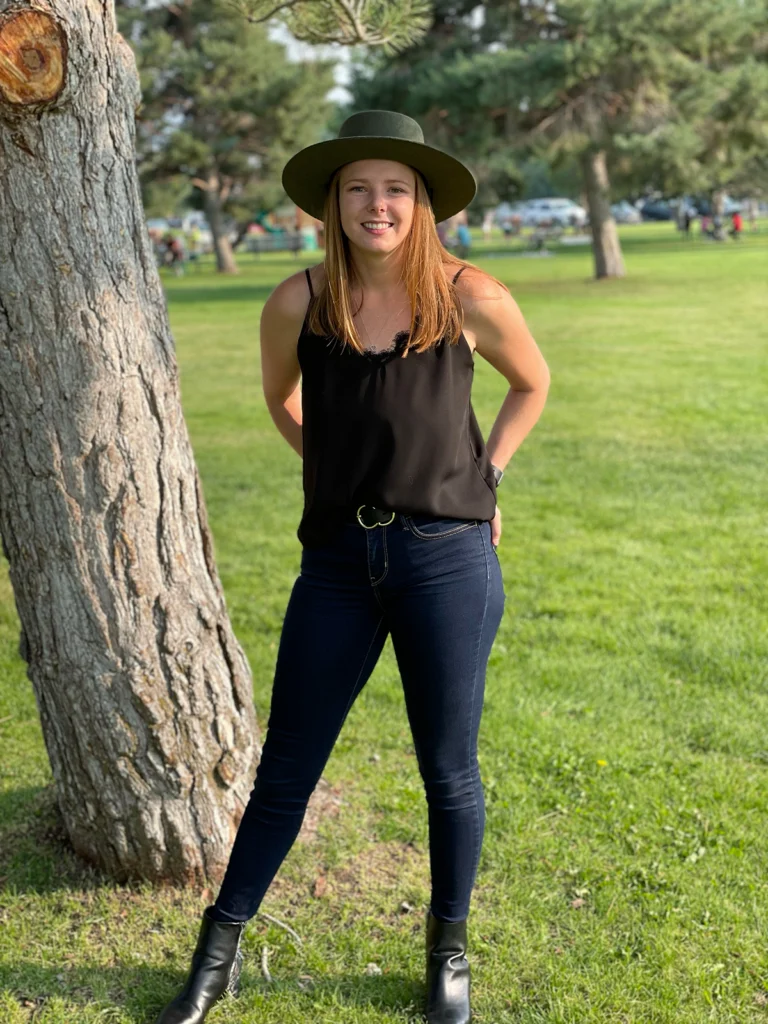
Jessie · Des Moines, IA
Independence Isn’t a Luxury. It’s a Human Right.
Roughly one in four American adults lives with some form of disability. That’s not a small population on the margins — it’s a quarter of the country. And across that group, the gap between what people are capable of and what they’re able to do is often not about ability at all. It’s about access.
Assistive technology closes that gap. A person who can’t grip a pen can still write. A person who can’t speak can still communicate. A person who can’t walk unassisted can still move through the world on their own terms. These aren’t small things. They’re the difference between dependency and dignity. Between isolation and participation. Between a life defined by what someone can’t do and a life defined by everything they still can.
The research is clear, too. Access to the right assistive technology reduces hospitalizations, decreases caregiver burden, supports continued employment, and improves mental health outcomes. It doesn’t just help the individual — it strengthens families, workplaces, and communities.
What I find most meaningful, though, isn’t the data. It’s the moment someone picks up a device for the first time and realizes — I can do this. That moment doesn’t get old.
Six Concussions and Counting — I Know What It Means to Need Support.
I’ve sustained more than six concussions over the course of my hockey career. The aftermath — the headaches, the memory difficulties, the migraines, the way your brain just doesn’t quite work the way it used to — is something I’ve navigated personally. And that experience has made me a better advocate.
Because I know what it feels like to sit across from someone and try to explain an invisible problem. I know the frustration of looking fine on the outside when something is genuinely wrong. I know that small tools can make an enormous difference in daily life, even when the challenges aren’t immediately visible to the people around you.
Bringing Assistive Technology Into the Conversation.
One of the things I believe most strongly is that assistive technology doesn’t work if people don’t know it exists. Clinicians, teachers, caregivers, and individuals alike need to know what’s available — and that’s where education and outreach become just as important as the devices themselves.
I’ve given presentations for the Brain Injury Alliance of Iowa focused specifically on incorporating assistive technology into recovery and daily care. These sessions bring together healthcare providers, therapists, educators, and individuals with brain injuries to explore practical tools that can support independence, communication, and cognitive function after injury.