Training Service Dogs
for Veterans Who
Gave Everything.
Since 2019, I’ve trained service dogs for combat-wounded veterans through the Puppy Jake Foundation — shaping animals that restore independence, rebuild connection, and change lives.
How I Found My Way to This Work.
I came to service dog training the way I’ve come to most meaningful things in my life — through a desire to be useful. During my time at Drake University, I got involved with a campus club called Bulldog Tails, where students helped socialize and train service dogs in their early stages of development.
I didn’t know then that what started as a college activity would become one of the defining commitments of my adult life.
After Bulldog Tails evolved into a different organization, I stayed with Puppy Jake Foundation — a Des Moines-based nonprofit that trains service dogs specifically for combat-wounded veterans.
I’ve been training with them since 2019. In that time, I haven’t been without a dog for more than a few weeks. These animals become woven into your daily life in ways that are hard to fully explain until you’ve experienced it.
Each dog I’ve trained has gone on to support a veteran living with PTSD, mobility challenges, or both. That knowledge — that something I helped shape is now helping someone rebuild their life — is not something I take lightly.
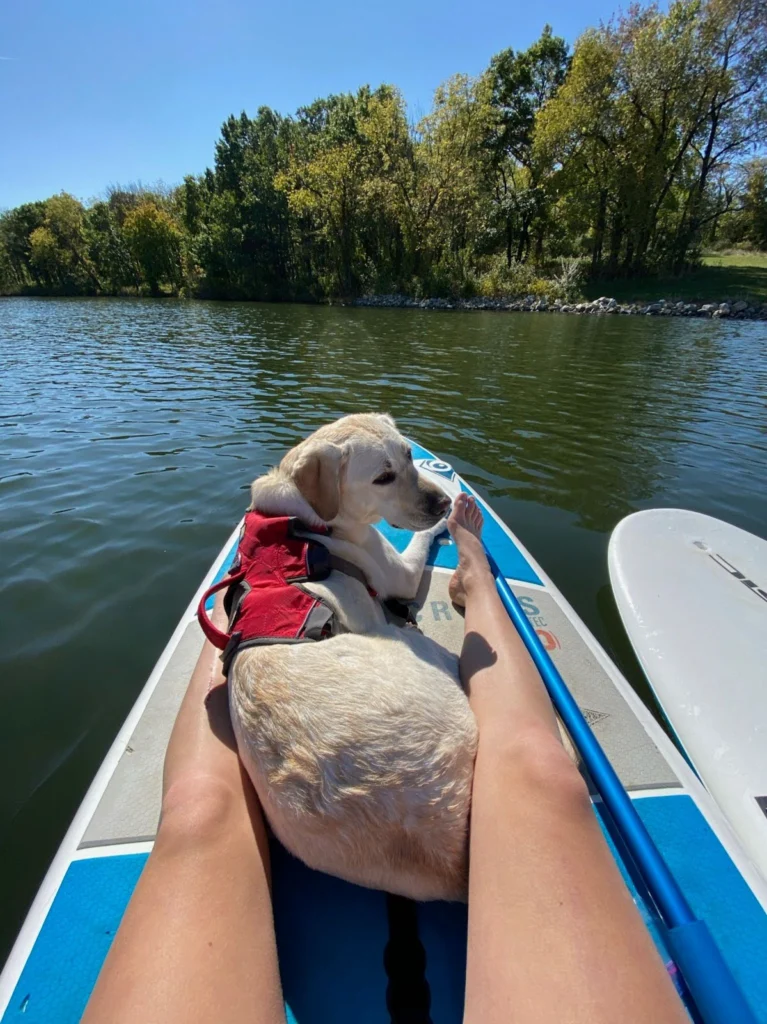
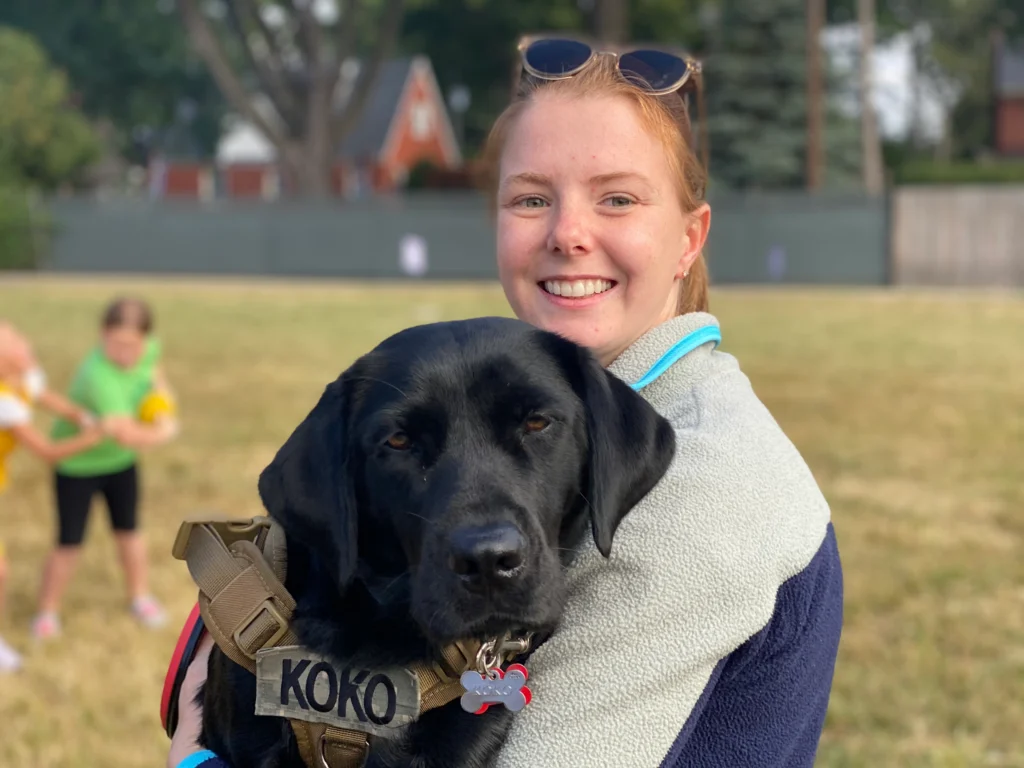
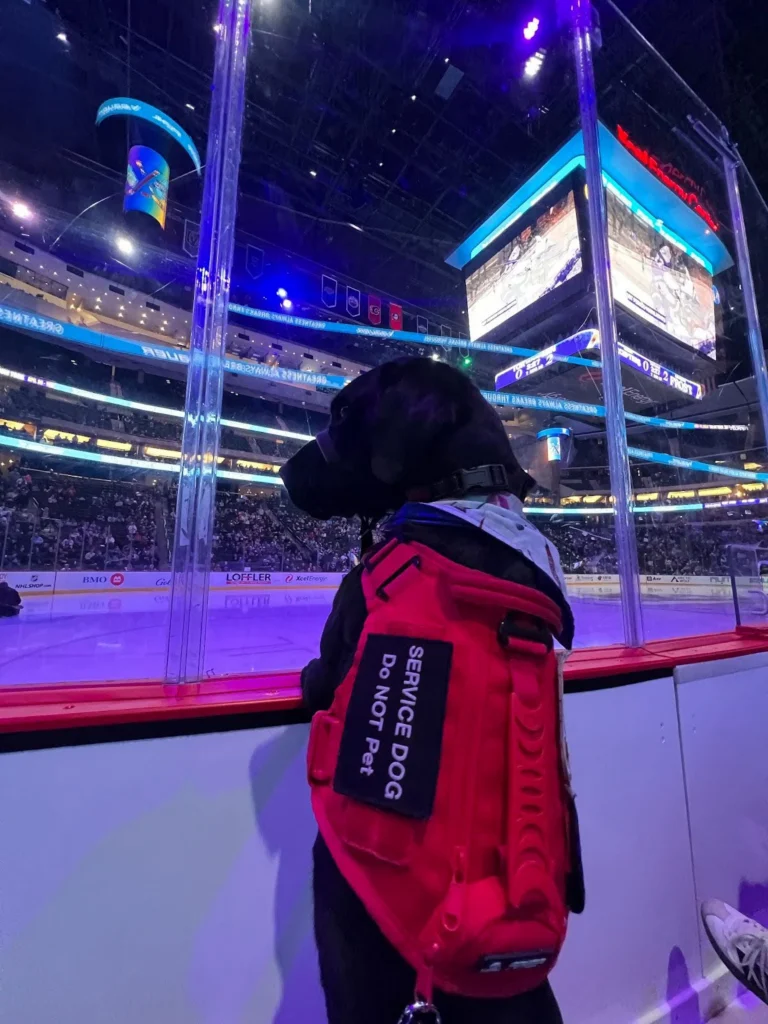
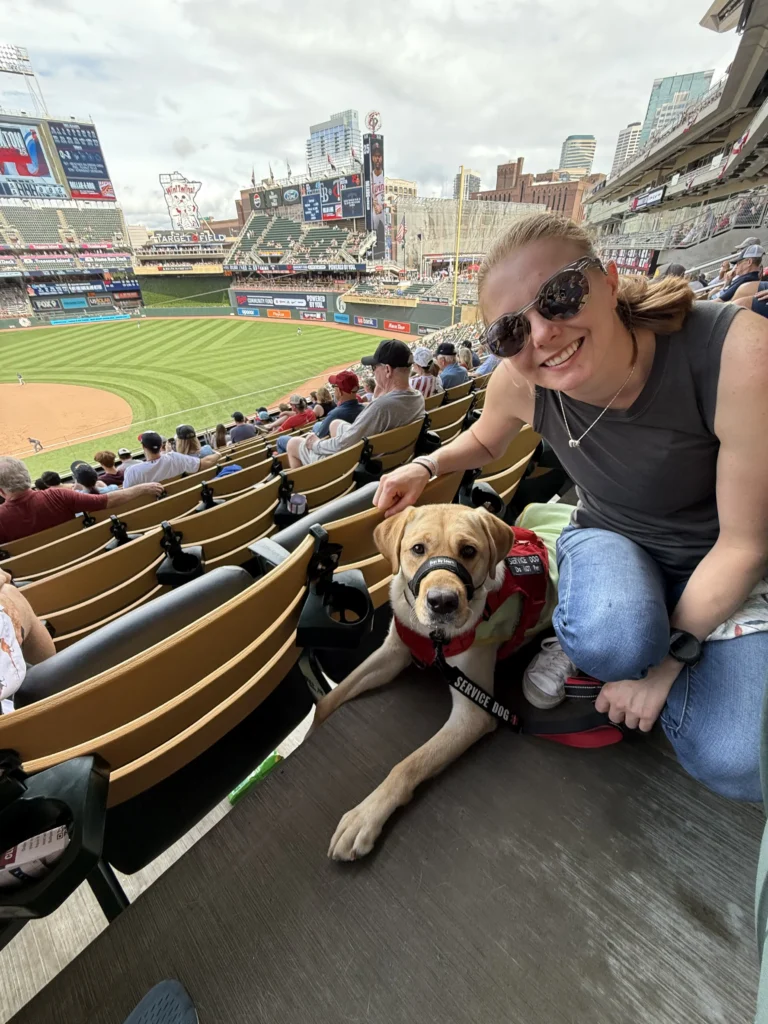
Here’s a photo gallery of the service dogs that I’ve had the privilege of training.
Service Dog on Duty
What Training a Service
Dog Actually Looks Like.
I typically received each dog at around one year of age, though some came earlier. My time with each dog ranged from three to fourteen months, with the average placement taking around eight months of dedicated, daily training.
Some dogs needed to master mobility assistance: bracing for balance, helping their handler rise from a chair, or retrieving dropped objects. Others were trained for PTSD support: recognizing distress, providing deep pressure therapy, waking their handler from nightmares, or creating physical space in crowded environments when anxiety spikes.
The dogs I’ve worked with can turn on light switches, detect medical events, retrieve medication and water on command, and provide grounding during dissociative episodes. Each skill took patience, repetition, and an intimate understanding of how that particular dog learns and communicates.
I paid attention to temperament. I noticed what motivated each dog. I learned to read their body language as clearly as a conversation. And somewhere in the middle of all that work, I found myself changed by it too.
Service Dog in Training · Des Moines
The Impact
How Service Dogs Transform Lives.
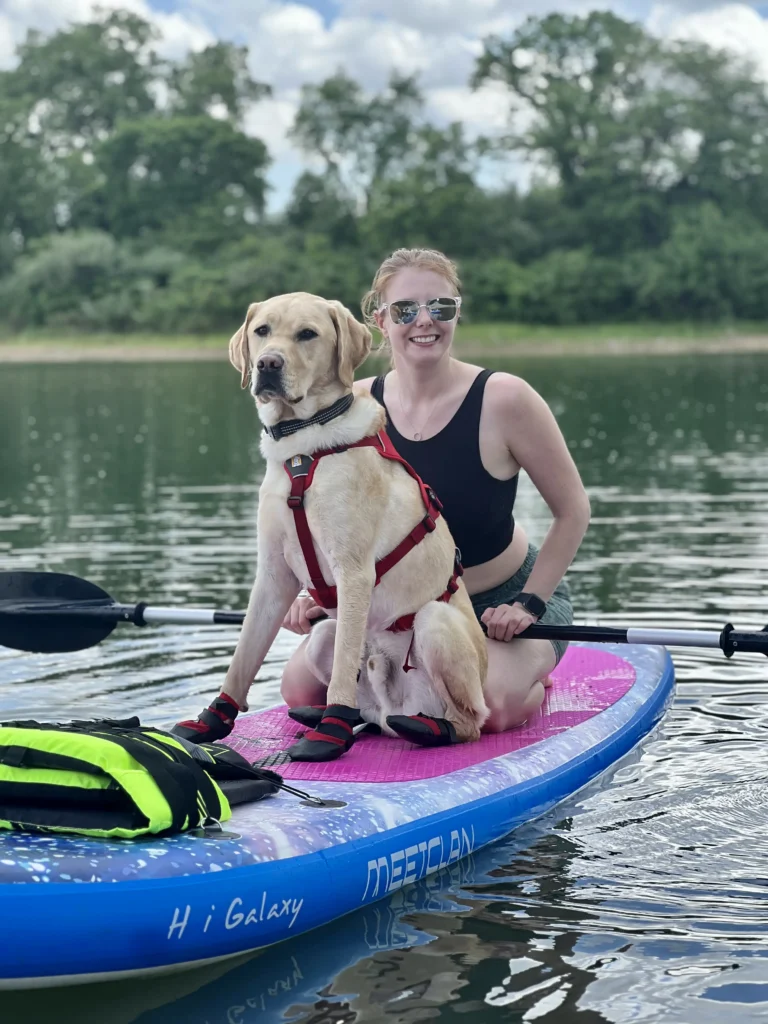
Every Dog Teaches You Something
Training Service Dogs Teaches You Things About Yourself.
I came into this work thinking I was the teacher. I wasn’t wrong, exactly — but the dogs taught me just as much as I taught them. Patience I didn’t know I had. The ability to stay calm when a dog was struggling, or when a skill that had clicked perfectly the week before seemed to evaporate.
The understanding that progress isn’t linear, and that frustration is information, not failure.
I learned to communicate without words. To observe without projecting. To meet each dog exactly where they were, on that particular day, and work from there. Those skills have made me better at everything else I do — at coaching, at my work in assistive technology, at being present with people who are navigating their own challenges.
Training service dogs has also reinforced something that was instilled in me from a young age: the importance of contributing to something larger than yourself. The values I grew up with — of giving back, of putting others first, of doing the quiet, unglamorous work that genuinely helps people — have found their fullest expression in this work.
Service Dogs Are Changing Lives Around the World.
The story of service dogs extends far beyond veterans. Around the world, trained service animals are transforming the lives of people with autism, epilepsy, diabetes, hearing and visual impairments, and a wide range of physical and psychiatric conditions.
What unites all of these relationships is a fundamental truth: connection heals. The bond between a person and a working dog built specifically for their needs is unlike almost anything else in medicine or rehabilitation.
In the United States alone, it is estimated that more than half a million veterans could benefit from a service dog, yet trained animals remain far too scarce. Programs like Puppy Jake Foundation, which rely on volunteer trainers and donors to function, fill a critical gap in what public systems fail to provide.
Every dog trained by a volunteer is a dog that a veteran would otherwise not have. Globally, organizations across Europe, Australia, Canada, Israel, and beyond are expanding access to service animals — recognizing that they reduce healthcare costs, decrease hospitalizations, improve mental health outcomes, and allow people who have been pushed to the margins of society to step back into the center of their own lives.
The Day You Hand the Leash Over.
Every trainer who has placed a service dog knows what I’m talking about. You’ve spent months with this animal. You know how they sleep. You know their favorite toy. You know the exact look they give you when they’ve done something well and they know it.
And then comes the day when you pass that leash to someone else.
It never fully gets easier. But it always feels right. Because you’ve also learned, over those months, exactly who this dog is going to and see the impact they will make on their life.
I’ve done it nine times. Each time, I’ve walked away with an emptiness in my home and an unexpected fullness somewhere harder to name.