Nine Dogs, Nine Goodbyes: What Training Service Dogs for Veterans Taught Me About Letting Go

By Jessie Rudin
Over the past five years, I’ve raised and placed nine service dogs. Nine different journeys. Nine different goodbyes. Nine lives changed—both theirs and mine.
But no matter how many dogs I’ve trained, I still remember the first one most vividly.
Because the first one broke me in a way I wasn’t prepared for.
The First Goodbye Nobody Warns You About
I spent over a year and a half with that dog—every single day, every single moment. From early mornings to late nights, from structured training sessions to quiet moments on the couch. That dog wasn’t just something I was raising… it was my companion, my routine, my responsibility, and in many ways, a part of me.
I learned their personality, their habits, the small things no one else would ever notice—how they reacted to new environments, what made them nervous, what made them confident. I built them from the ground up into a dog that would one day change someone’s life.
And then, one day, it was over.
I didn’t know the person they were going to. I didn’t know their name, their story, or what they had been through. I only knew the list of skills they needed. That was all.
There was no closure. No reassurance. No moment of understanding.
Just a leash in my hand… and then suddenly, no leash at all.
I walked away without the dog that had been by my side 24/7 for over a year and a half, and I remember the silence more than anything.
The absence.
The feeling of reaching down without thinking—only to realize they weren’t there anymore.
It didn’t feel rewarding in that moment.
It just felt empty.
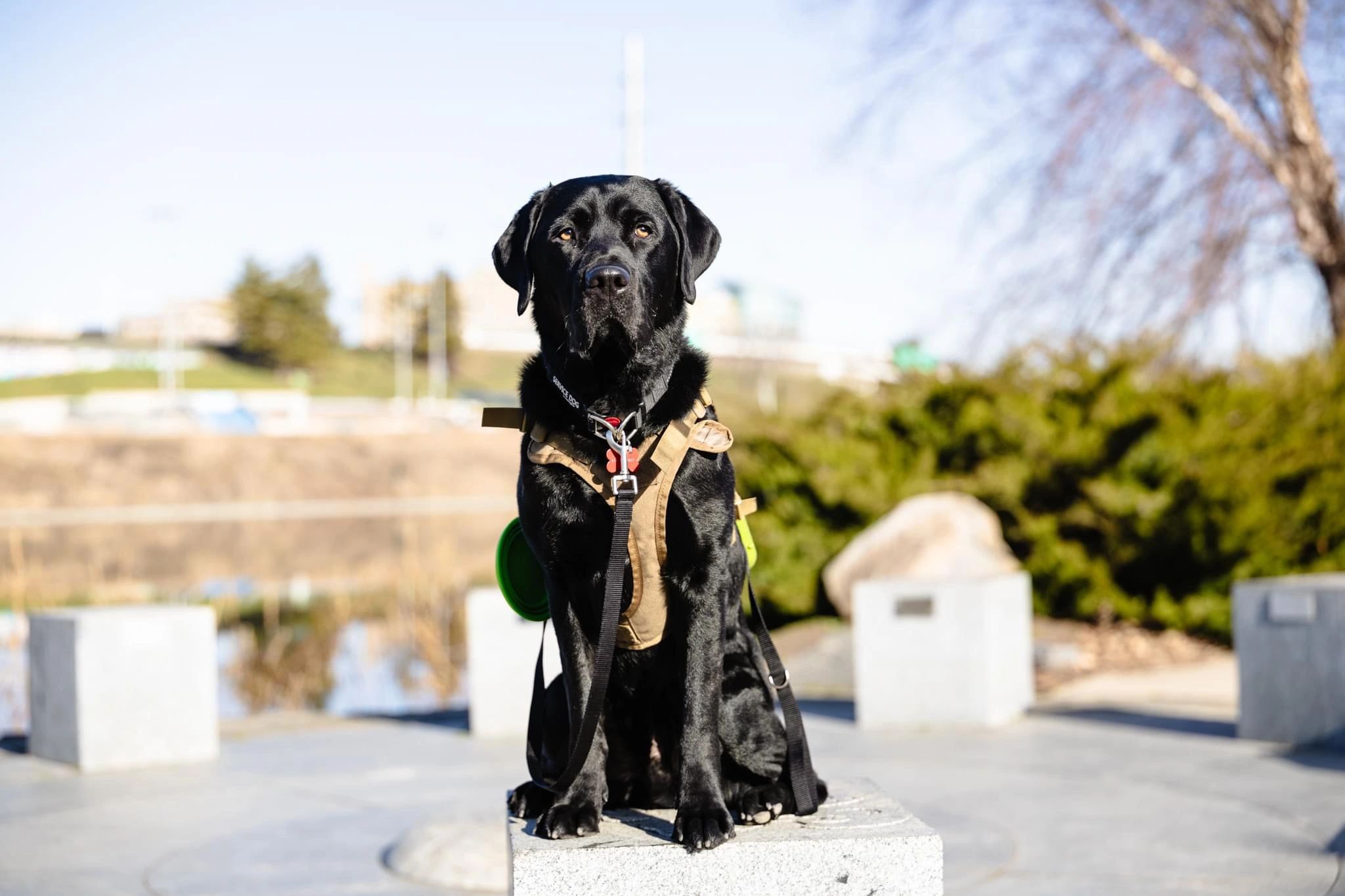
One of my statuesque training buddies sitting at full attention.
Meeting the Veterans Changed Everything
As the program evolved, so did the experience.
With the dogs that followed, we were finally able to meet the veterans during the last stage of training. And that changed everything.
Suddenly, it wasn’t just about training a dog—it was about preparing that dog for a specific person, a specific life, a specific story. I got to learn who they were beyond their diagnosis. I learned what their lives looked like before service—and what they missed most.
I learned about the small things they wanted back:
Going to the store without fear. Sitting through a child’s sports game. Walking into public spaces without scanning every exit.
Things most people take for granted suddenly felt incredibly significant. And it gave the training a deeper purpose.
Why Every PTSD Service Dog Is Different
PTSD looks different for every veteran.
There is no single template, no one-size-fits-all solution. Each person carries something different—memories, triggers, anxieties—and each dog must be trained to respond in a way that meets those exact needs.
Some dogs are trained to create physical space in crowds. Some provide grounding during panic attacks. Some interrupt behaviors or wake their handler from nightmares.
Every task is intentional. Every detail matters.
Research published by the U.S. Department of Veterans Affairs confirms what those of us in the field see firsthand: pairing veterans with trained service dogs is linked to measurably lower PTSD severity and improved mental health outcomes. The science backs what I’ve witnessed in living rooms, grocery stores, and parking lots across Iowa.
And when you meet the person behind those needs, it changes how you train.
It becomes personal.
It becomes meaningful in a way that’s hard to describe. It also brings a sense of peace.
Because now, when it’s time to let go, you know where they’re going. You know who they’re going to love, and who is going to love them back.
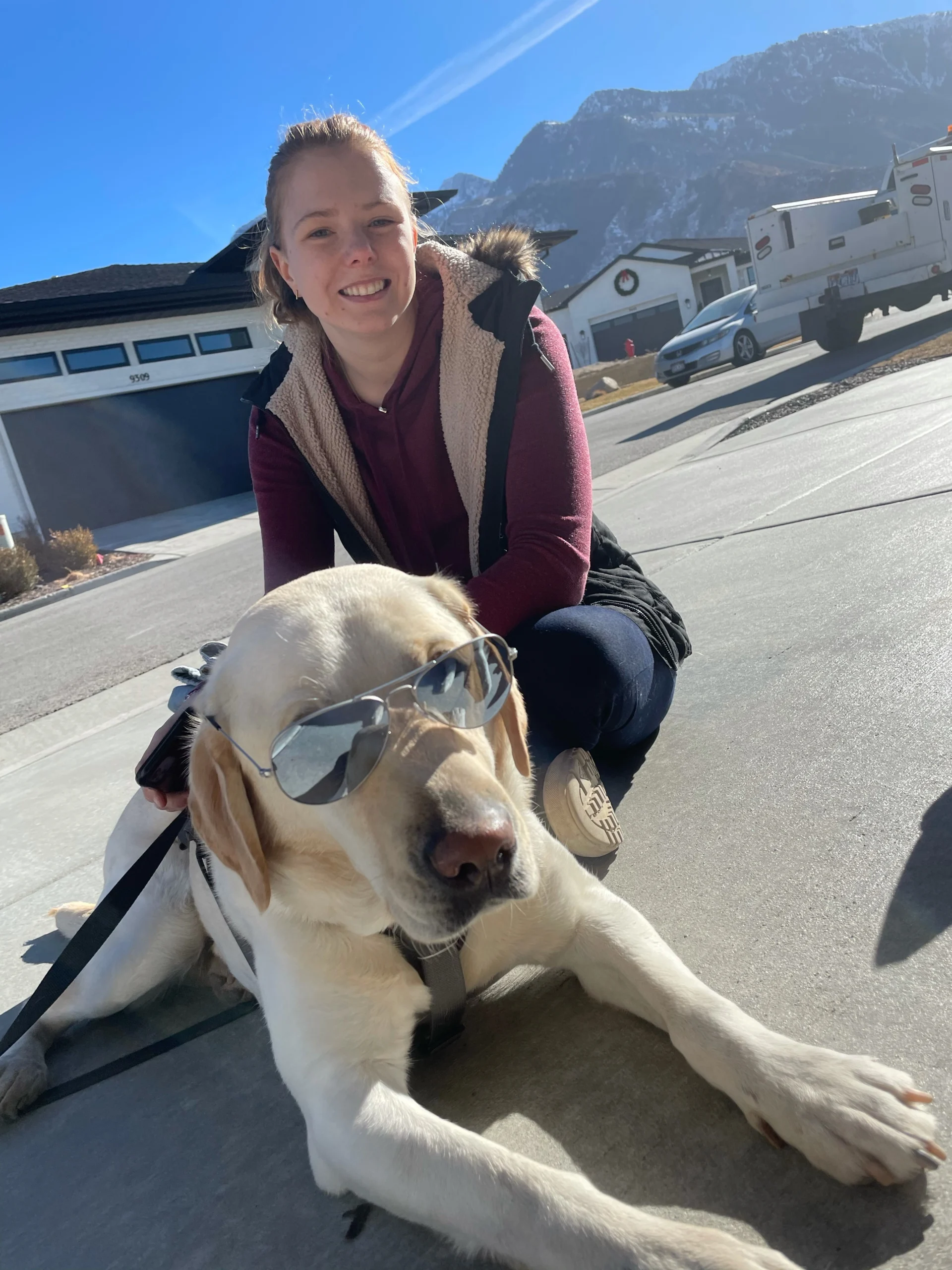
A very cool character chilling after a successful training session.
The Bonds That Last Beyond the Leash
What I never expected was how much these veterans would become part of my life.
Some choose not to stay connected, and that’s completely understandable. But many don’t. Many stay.
Through team trainings and shared experiences, relationships form naturally. Conversations turn into friendships, and in some cases, into something that feels like family.
There’s a level of trust and vulnerability in this process that creates a bond beyond just “trainer and recipient.” You’ve both invested something deeply emotional into the same dog.
And sometimes, they thank us in ways that feel too big to accept. They tell us we’ve changed their lives.
But the truth is—we don’t do this to be thanked. We don’t do it expecting anything in return.
We do it because they’ve already given everything. If this can help them get even a small piece of their life back, then it’s worth every early morning, every long day, every difficult goodbye.
The Moment I’ll Never Forget
There are moments in this journey that stay with you forever.
One of mine happened in a Target store.
I was doing a one-on-one training session with a veteran’s dog. The dog was sitting perfectly at my side, exactly as they were trained—calm, focused, and waiting for instruction. Service dogs don’t break position. They don’t leave unless they are told.
We sat there for several minutes as people walked in and out of the store.
The dog didn’t react once.
And then the veteran walked in.
Before he could even make it through the second set of doors, everything changed.
The dog stood up instantly—no hesitation. His entire body lit up. His tail wagged uncontrollably, his whole back end wiggling with excitement. And without being told, he ran straight to him.
Out of everyone who had walked through those doors… he knew. He knew exactly who his person was.
In that moment, time felt like it stopped. There was no question, no uncertainty. That was his person, and he had found him.
You could see it in both of them—the relief, the happiness, the connection. It was something deeper than training. It was instinct. It was a bond. It was trust forming in real time.
They were no longer separate. They were a team.
Handing Over the Leash
Handing over the leash will never be easy.
There will always be a moment of loss. A quiet car ride home. An empty space where a dog used to be. A routine that suddenly feels incomplete.
But at the same time, it becomes the easiest part of the entire journey.
Because you see it.
You see that they are happy. You see that they are where they are meant to be. You see that everything you poured into that dog now has a purpose far greater than you.
They were never meant to stay. They were meant to go.
These teams spend months building trust—just one day at a time—until one day, it clicks. They are no longer just learning how to work together. They belong to each other.
And watching that transformation in the veteran is something I will never be able to fully put into words.
You watch someone slowly regain confidence. You watch them start to do things they haven’t done in years. You watch their world begin to open back up.
A Dog Walking Next to a Person
To most people, it might look like just a dog walking next to a person.
But to that person, it is everything.
It is their sense of safety in a world that once felt unsafe. It is their independence after years of relying on others. It is their ability to live, not just get by. It is their lifeline. Their confidence. Their freedom—restored.
I’ve been volunteering with Puppy Jake Foundation since 2019—a Des Moines-based nonprofit that trains service dogs for combat-wounded veterans at no cost to the veteran. If you want to learn more about my work with these dogs and what the training process actually looks like, you can read more on my service dogs page.
Jessie Rudin is a service dog trainer for combat-wounded veterans through Puppy Jake Foundation, an assistive technology specialist at Easterseals Iowa, and a hockey coach based in Des Moines.