Hockey Didn’t Shape
Just My Game.
It Shaped Me.
More than two decades on the ice — as a skater, a competitor, and a coach — hockey has been the constant thread running through everything I do and everything I am.
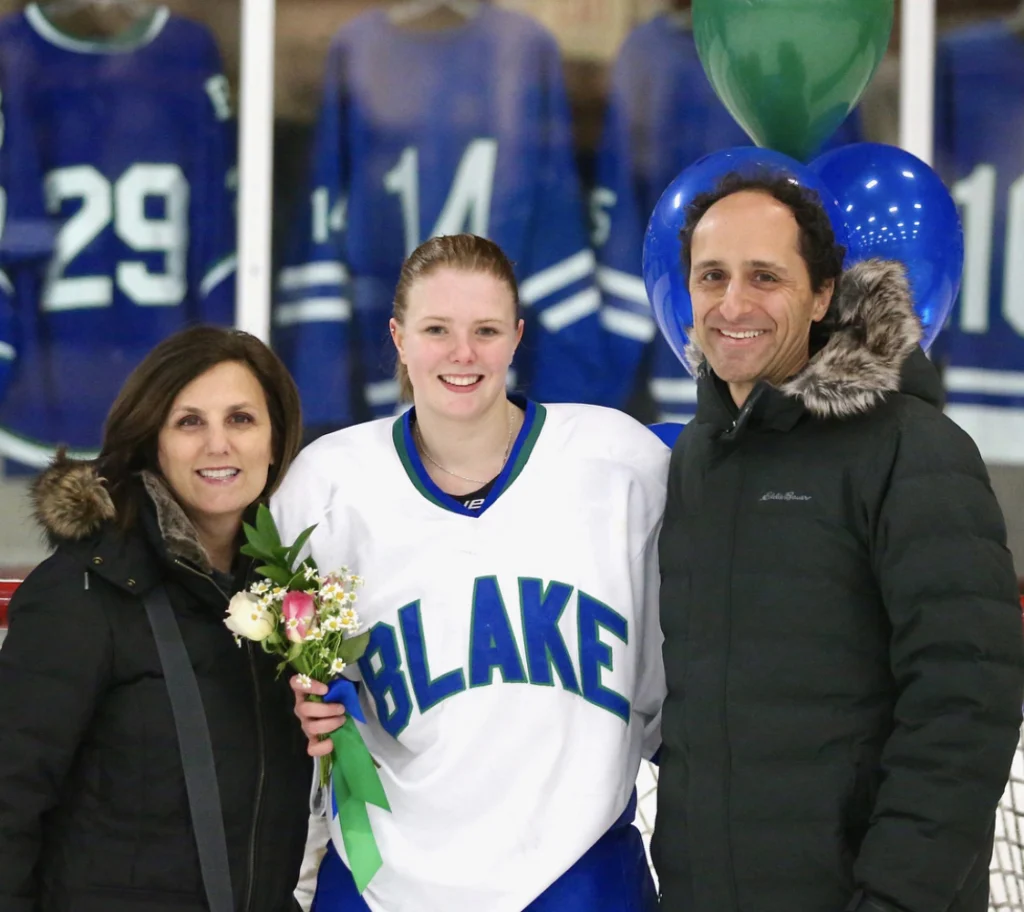
From First Strides to Lifelong Obsession.
I put on skates for the first time at age three. Two years later, I was playing hockey. From that point forward, the rink was my second home — and some summers, it felt like my first. Three ice sessions in a single day wasn’t unusual. Seven days a week on the ice wasn’t a grind; it was a gift.
I started out with Armstrong/Cooper, joining one of the association’s first female teams — a detail that felt unremarkable to me at the time, but one that has taken on more meaning as I’ve grown into coaching and advocacy. In middle school I moved to Wayzata, developing as a player and leaning into the technical side of the game. By the time I got to Blake, I was a student of hockey — thinking not just about how to play, but why certain things work, how to read the ice, how to lead.
I played both forward and defense throughout my career, always willing to slot into wherever my team needed me. I preferred defense — I love the patience it demands, the chess-like reads — but I logged serious time at center, too. Hockey taught me early that you serve the team, not your preferred position.
When I arrived at Drake University, the school didn’t yet have a hockey program. So I played in adult leagues for my first two years until Drake restarted its team. I played two seasons as a Drake Bulldog before stepping off the ice and behind the bench — moving from player to assistant coach, a transition that turned out to feel completely natural.
I played both forward and defense throughout my career, always willing to slot into wherever my team needed me. I preferred defense — I love the patience it demands, the chess-like reads — but I logged serious time at center, too.
When I arrived at Drake University, the school didn’t yet have a hockey program. So I played in adult leagues for my first two years until Drake restarted its team. I played two seasons as a Drake Bulldog before stepping off the ice and behind the bench — moving from player to assistant coach, a transition that turned out to feel completely natural.
The Road from Rink Rat to Coach.
Armstrong/Cooper → Wayzata
Joined one of the association’s first female teams at Armstrong/Cooper, then moved to Wayzata to continue developing. Defense. Center. Whatever the team needed.
What Coaching Actually Means.
In the wake of the USA women’s hockey team winning gold at the 2026 Olympic Games and the PWHL starting up in 2023, women’s hockey is now more relevant than it ever has been before. That’s why it’s so important to me to help spread the word and get women involved in playing the greatest sport on ice.
Coaching hockey — voluntarily, unpaid, because you love it — teaches you something about yourself quickly.
You realize the scoreboard matters less than you thought.
What matters is the player who skated tentatively in October and is now leading a rush in February. What matters is the player who finally trusts themselves enough to take the shot.
When I coached, I coached the whole player: the skills, yes, but also the confidence, the team-first mindset, the resilience after a bad period to persevere and become a leader on their team.
My coaching philosophy was shaped by the coaches who invested in me — and by the ones who didn’t. I learned from both. I try to bring technical rigor combined with genuine care for the person wearing the jersey, not just the number on it.
Being a female coach in a male-dominated sport comes with its own terrain to navigate. There are moments of being underestimated, of having your credentials questioned, of having to prove what male coaches are simply assumed to have. But there’s something quietly powerful that happens when a young girl looks across the ice and sees a woman behind the bench. I’ve watched it happen. It changes something.
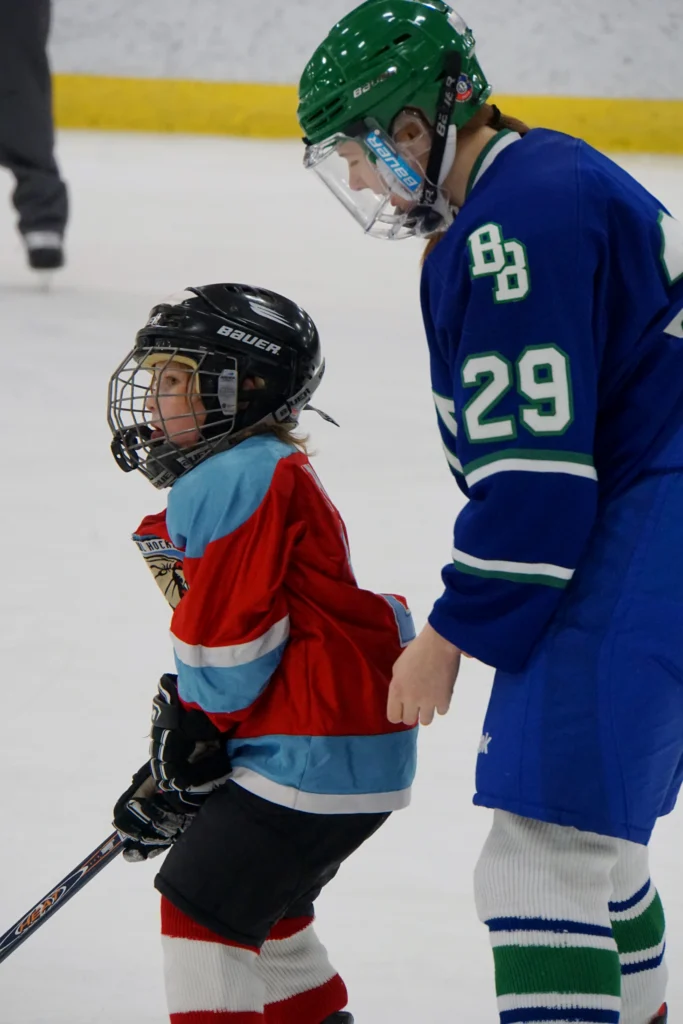
Coaching · Des Moines, IA
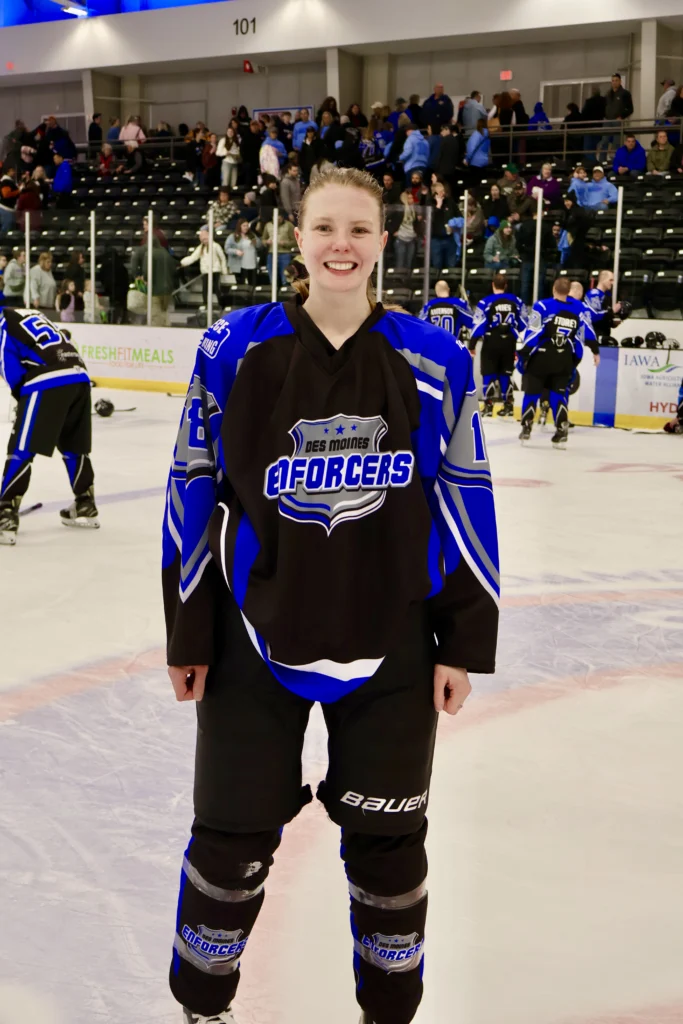
Advocating for Women in Hockey
Women in Hockey Coaching: Where We Are & Where We’re Going.
When the Seattle Kraken hired the first female coach in the NHL — Jessica Campbell — it made headlines. Which tells you something — not about how far we’ve come, but about how far we still have to go. A woman coaching professional hockey should not be news. The fact that it is news is the story.
I’ve spent my career inside that gap. Playing on one of the first girls’ teams at my youth association. Becoming the only female coach at a summer camp I’d attended as a player for years. Coaching a college team as a young woman in a sport where the faces behind benches have historically looked very different from mine.
The pipeline matters. Girls who see women coaching — at the youth level, at the high school level, at the college level, at the professional level — are more likely to pursue coaching themselves. Every female coach who stays in the sport makes the next one more possible. That’s not idealism. That’s just how representation works.
The technical game is evolving quickly, and women are at the forefront of some of that evolution. The analytical rigor now applied to hockey — video breakdown, tactical systems, player development science — is democratizing expertise. Your value as a coach has less to do with having played at a certain level and more to do with your ability to teach, communicate, develop talent, and build team culture, and community. Those are skills that cross every gender line.
What I hope for, honestly, is that within a decade we stop counting. Stop counting how many women are coaching at the professional level. Stop tracking it as a milestone. I want a young girl who loves hockey to grow up and become a head coach in the NHL — not because it’s historic, but because it was obvious. Because she worked hard, she knew the game, she had a gift for leadership, and the door wasn’t closed.
I don’t think I’ll be coaching in the NHL. But I know that every season I spend on the ice with a group of beginners, or behind the bench with a team learning how to compete, I’m contributing — in the small, unglamorous, necessary way that most real change actually happens.