Why I Coach: Jessie Rudin on Hockey, Mentorship, and Why More Women Belong Behind the Bench
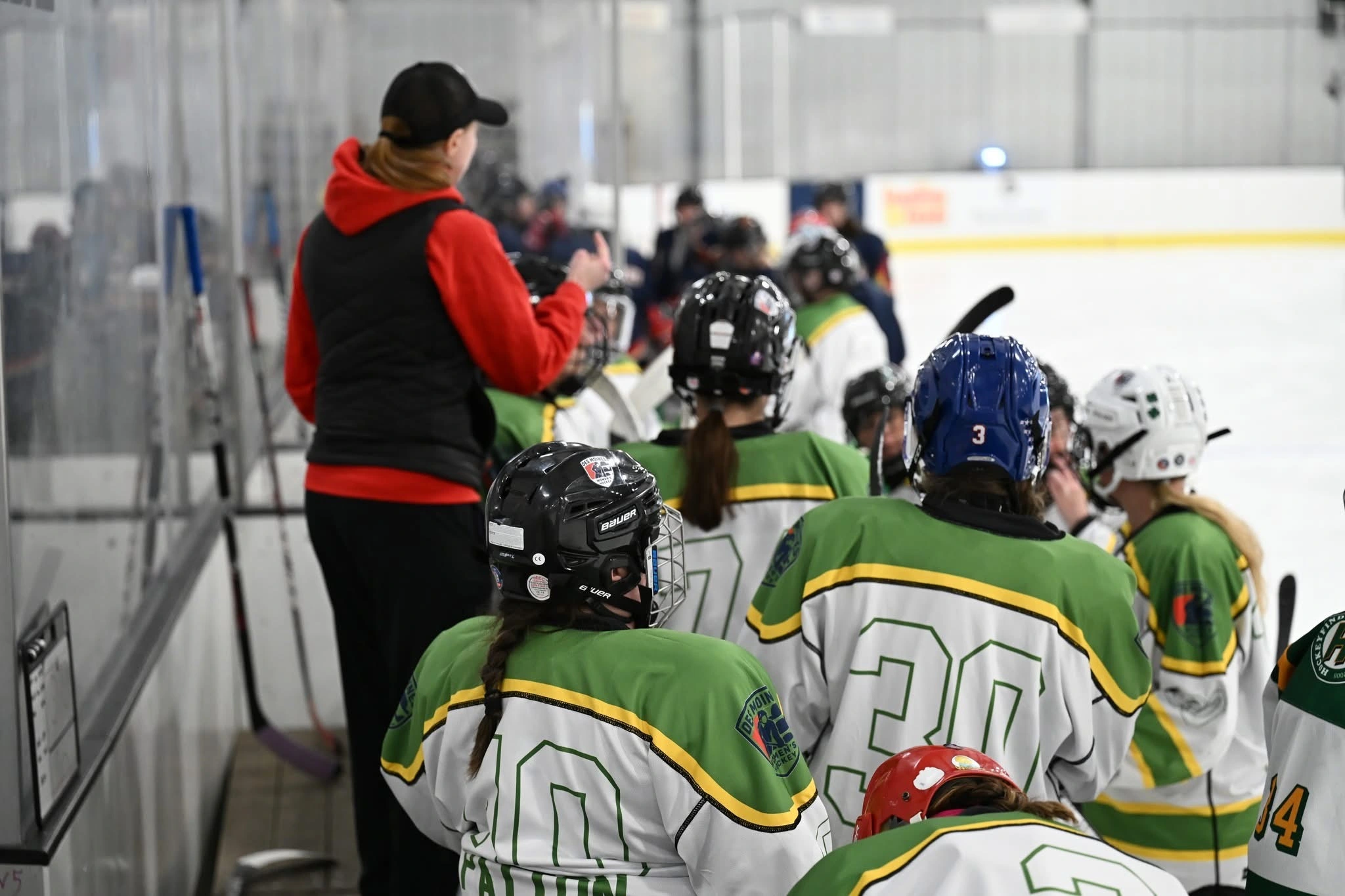
Most people are still asleep when the first players step onto the ice.
The rink is cold and quiet.
Parents clutch paper cups of coffee, huddled in their winter jackets on cold bleachers, sacrificing another early morning to watch through tired eyes and frozen fingers.
There are no headlines waiting to be written, no crowds chanting names — just the scrape of skates, the crack of sticks, and young athletes putting in hours nobody sees, driven by a dream they can’t quite explain but refuse to let go of.
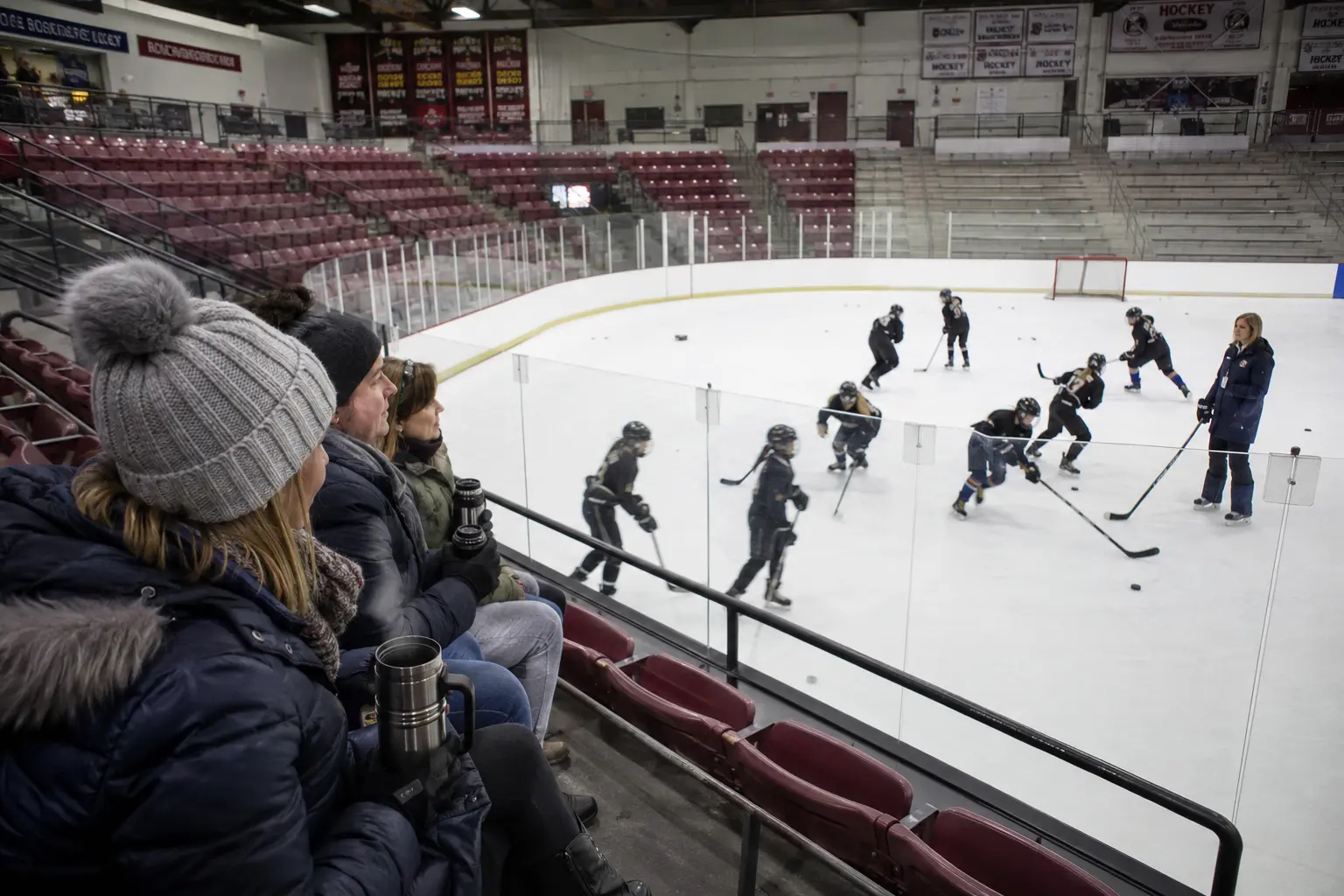
I stand beside them, sharing that same dream. Not the dream of playing, but of helping these kids become the best version of themselves.
Long before the crowds, scholarships, or championships, coaches are there opening the rink, planning practices, correcting mistakes, and encouraging players through setbacks.
We sacrifice the same early mornings and late nights because we believe in what these young athletes can become. Every extra drill, every piece of feedback, every hour spent in a cold rink is driven by one goal: helping kids improve, grow, and one day achieve the dreams that brought them to the ice in the first place.
I don’t do this for a paycheck. If it were about the money, there are far easier ways to spend early mornings, late nights, and weekends.
I do this for the moment when something finally clicks — when a player masters a skill they’ve been struggling with, gains confidence, or realizes they’re capable of more than they thought.
There is nothing more rewarding than watching young athletes grow, not just as hockey players, but as people. Their success, their growth, and their determination are the real rewards. The reason is standing on the ice every day, helping kids chase their dreams and become better than they were yesterday.
Some of my own coaches were the reason I fell in love with hockey the way I did, and giving that same gift to just one other player is worth all of it.
I’ve always believed that if you can’t go a day without thinking about something, you owe it to yourself to chase it.
Hockey has been that for me.
Coaching has been that for me.
That’s why the early mornings and long hours never feel like a burden.
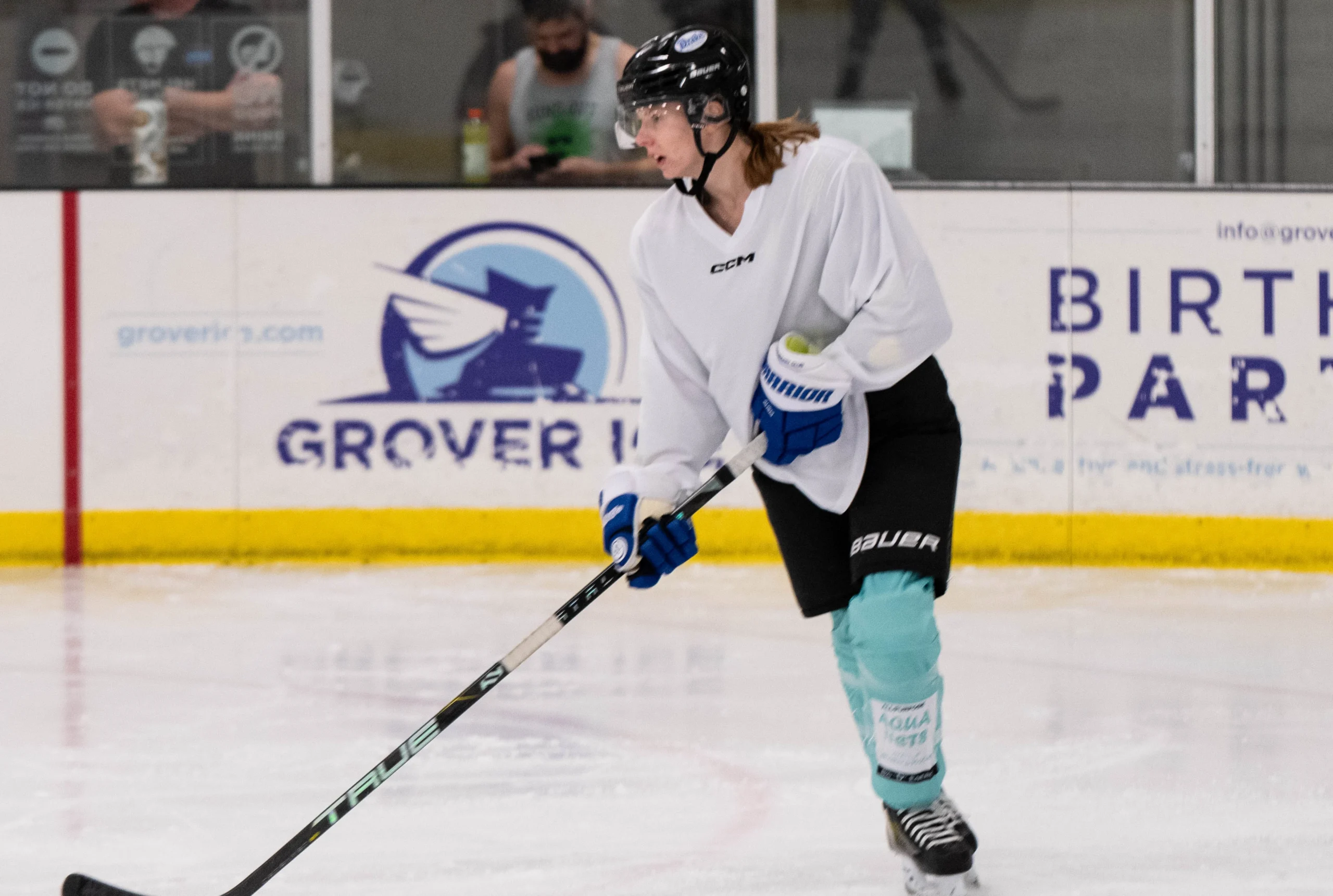
Looking to pass in a game a few years back
The Rink That Raised Me
That devotion goes back further than my coaching career. I’ve been skating since I was three years old, and long before I could read, I could lace up my skates and step onto the ice. The rink wasn’t just a place I went after school or on weekends — it became my second home.
Some of my earliest memories were made there, across countless hours on the ice, in the locker room, and in the stands. It was where I learned discipline, built lifelong friendships, celebrated victories, and worked through disappointments. The rink helped shape who I am, both as an athlete and as a person.
Because of that, being at the rink has always meant more to me than hockey. It’s where I feel at home, where I belong, and where some of the most important lessons of my life were learned.
No paycheck could ever replace the feeling of watching a young player gain confidence, master a skill they’ve been working on, or achieve a goal they once thought was out of reach.
The reward is seeing that same passion and love for the game grow in the next generation, and knowing I can give kids the same opportunities, memories, and sense of belonging the rink gave me.
Ten Years Behind the Bench
Now, after more than ten years of coaching, the rink means something even deeper. It’s no longer just a place where I chase my own passion — it’s a place where I get to help young players discover theirs.
Over the last decade, I’ve had the privilege of watching hundreds of kids and adults grow, not just as hockey players, but as people. I’ve seen nervous first-year players become confident leaders.
I’ve watched kids who struggled to skate make teams they once thought were out of reach. I’ve seen players fail, get frustrated, want to quit, and then come back stronger than ever because someone believed in them.
Some of my favorite memories aren’t championship wins or trophies. They’re the small moments most people never see: a player staying after practice to work on something because they’re determined to get better, the smile that appears when hard work finally pays off, the excitement of finally accomplishing something they’ve been chasing for months.
Those moments are why I coach.
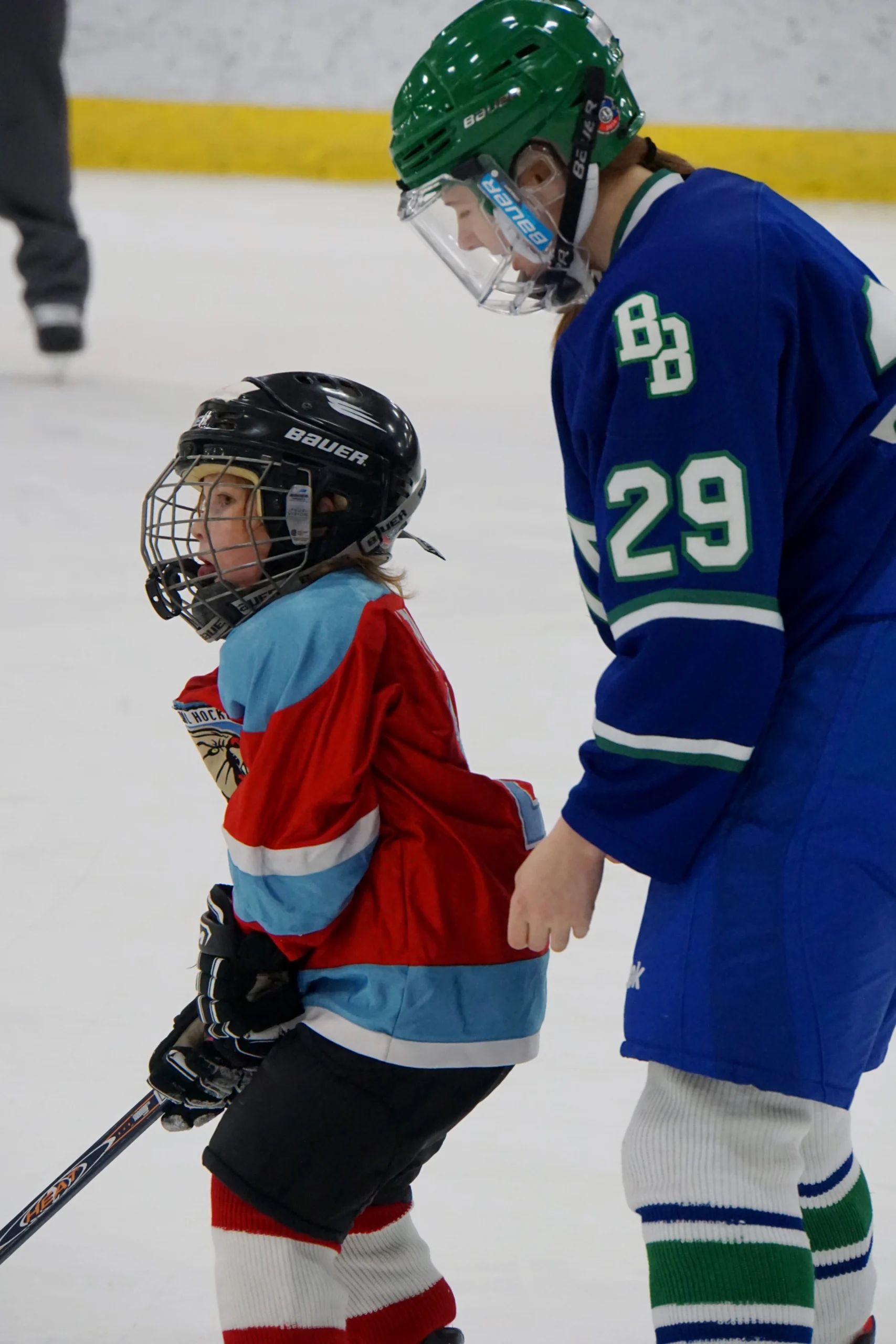
Mentoring one of the future PWHL stars of tomorrow
Coaching Is Just One Way I Serve
Coaching has never been the only way I’ve chosen to serve others. Service has become a core part of who I am and how I try to make a difference in the lives of the people around me.
Whether I’m coaching young athletes, training service dogs for combat-wounded veterans, or working with Easterseals Iowa, the motivation comes from the same place: helping others reach their full potential and creating opportunities that can change lives.
Training service dogs has taught me the incredible impact that patience, dedication, and support can have on someone’s independence and quality of life. Through my work with Easterseals Iowa in assistive technology, I’ve seen firsthand how important it is to build inclusive communities and provide opportunities for people of all abilities to thrive.
In many ways, the lessons are the same as coaching: every person deserves someone who believes in them, invests in them, and helps them recognize their own potential. Whether it’s a young hockey player experiencing a breakthrough on the ice, a service dog learning a skill that will transform someone’s daily life, or an individual discovering new independence, the most rewarding moments come from watching growth, confidence, and joy take shape.
Service isn’t something I do — it’s part of who I am. The ability to positively impact someone’s life, no matter how big or small the role, is worth more to me than any title or paycheck ever could.
Learning to Compete as One of the Only Girls on the Ice
That belief in showing up for others is rooted in my own experience learning to compete. I started playing hockey at age five and was one of only a handful of girls in the Armstrong-Cooper program.
As I got older, that experience continued. At Top Dog Hockey Camp, I remained one of the only girls across all age groups, often stepping into environments where I felt the need to prove I belonged — competing alongside boys who were naturally bigger, stronger, and more physically developed than I was.
Rather than viewing that as a disadvantage, I learned to embrace the challenge.
Those experiences taught me resilience, determination, and the value of hard work. They pushed me to develop not only as a hockey player, but as a person. I learned that success isn’t about being the biggest or strongest — it’s about showing up every day, putting in the work, and refusing to back down from adversity.
Being one of the few girls on the ice taught me to believe in myself and find confidence in my ability to compete, regardless of the obstacles in front of me. So when I started coaching for Top Dog Hockey as the only female coach in the program, it made me want to be there for other girls in the program and across the hockey community.
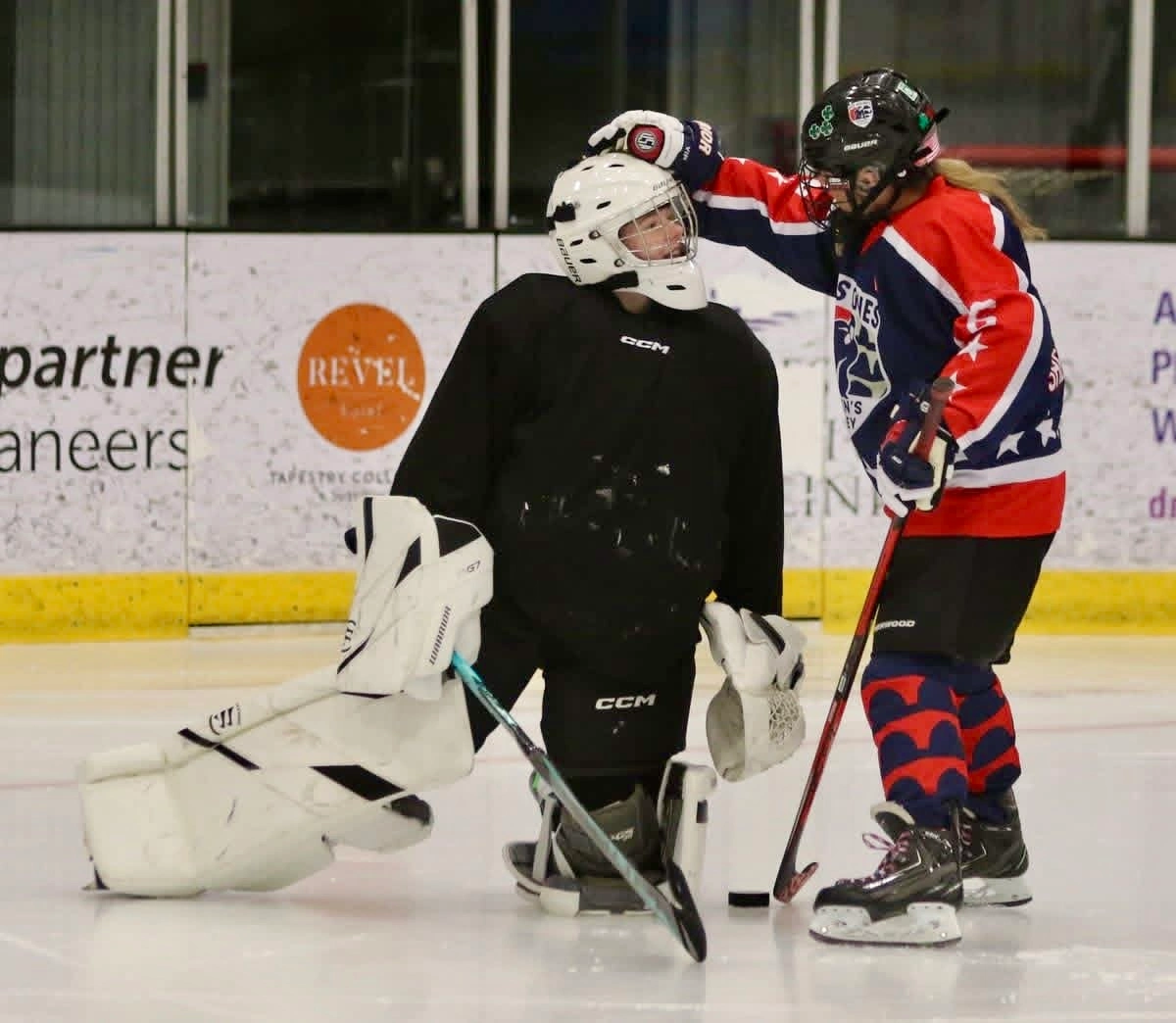
Earning the trust of my fellow teammates is an important step to becoming a leader and role model
Becoming the Role Model I Once Needed
One of the most meaningful parts of coaching has been the opportunity to serve as a role model for the girls on my teams. Throughout much of my own hockey career, female players and coaches were few and far between, and I understood how important it was for young girls to see someone who had followed a path similar to theirs and succeeded in a sport that has traditionally been male-dominated.
Representation matters.
When a young athlete sees a female coach behind the bench, running practices, teaching skills, and leading a team, it reinforces the idea that there’s a place for them in the game — not just as players, but as leaders.
It’s about helping create opportunities and open doors for the next generation of female athletes.
From Wayzata to Drake: My Path Through the Game
My own path started at a time when there were very few opportunities for girls in my association. In middle school, I moved to Wayzata Hockey, a larger program with a stronger focus on girls’ hockey and player development.
I later played for The Blake School, one of the most competitive and well-respected girls’ hockey programs in Minnesota, where I had the opportunity to compete alongside some of the top players and coaching staff in the state, and was the first time I had female coaches. You can read more about that journey on my hockey page.
After graduating high school and attending Drake University, I continued playing in adult leagues in Des Moines due to the lack of a women’s collegiate team.
During my final two years, I played for the Drake Hockey Club, where I was not only the only woman on our roster but often the only woman competing in our division.
After graduation, I spent two seasons coaching, giving back to the sport that had shaped my life and helping young athletes discover the same passion, confidence, and opportunities hockey gave me.
Watching the Next Generation of Women Step Behind the Bench
Throughout my coaching experience, I’ve worked with athletes at every level, from youth programs to collegiate competition. I’ve also had the privilege of skating beside and coaching women’s programs and tournament teams through the Des Moines Women’s League, where I’ve built lasting friendships while helping women develop a passion for the sport.
One of the most rewarding parts of that experience has been watching participants grow into leaders themselves.
Several women I’ve coached have gone on to pursue coaching and leadership opportunities of their own within the sport, which has been incredibly inspiring. In a field that has traditionally been male-dominated, it’s empowering to see women break barriers and achieve success at every level of the game.
A particularly inspiring example comes from the Des Moines Women’s League, where one member served not only as an assistant coach for a AAA select travel team, but also as head coach of our local house league team.
It’s people like her who continue to build the community up for the future generations. She inspires me every day, and she inspires all the young girls pursuing their dreams on the ice.
Why Representation Matters — By the Numbers
The need for more women behind the bench isn’t just anecdotal. According to research from the Women’s Sports Foundation, girls drop out of sports at meaningfully higher rates than boys, particularly as they move through adolescence, and girls nationwide have 1.3 million fewer opportunities to play high school sports than boys.
With limited representation of women in playing, coaching, and administrative roles, many young girls struggle to envision themselves pursuing long-term opportunities in sport. Increasing visibility and representation is critical to fostering confidence, ambition, and a sense of belonging for the next generation of female athletes.
One of the most encouraging developments for young girls in hockey has been the growth of the Professional Women’s Hockey League (PWHL). The league has given aspiring athletes high-profile role models while demonstrating the growing interest in women’s sports.
Last season, the PWHL drew more than 1.1 million fans across its regular season, a roughly 71 percent increase over the 392,259 fans who attended during its inaugural season just two years earlier. That growth reflects the expanding popularity of women’s hockey and the importance of continued investment in opportunities for women both on and off the ice.
The impact of representation extends far beyond simply seeing women participate in sports.
When a young girl sees a woman running drills, managing line changes, making strategic decisions, and serving as the authority on the ice, it fundamentally changes her perception of what’s possible.
Leadership becomes something she can aspire to, not just observe from a distance. Female coaches and leaders show young athletes that women belong in every part of the game — playing, teaching, mentoring, and leading — and help them understand that their future in sports can extend well beyond their time as a player.
My Advice to Every Woman Considering Coaching
If you’re a female athlete considering coaching, my advice is simple: go for it. Coaching is one of the most rewarding experiences, not only because of the positive impact you have on your players, but because you have the opportunity to inspire the next generation of coaches and leaders, on and off the ice. You don’t need a formal title or a paid position to get started. Take the first step and reach out to local programs and organizations — many are actively seeking volunteer coaches, especially women, for both co-ed and girls’ programs.
Your experience, perspective, and leadership can make a meaningful difference in the lives of young athletes.
I’ve met many women who competed at a high level in sports but still doubted whether they had what it takes to be a coach.
The truth is, you never know until you give it a try.
Simply showing up, sharing your knowledge, and being a positive role model can have a tremendous impact. These athletes are eager to learn, grow, and have fun, and your presence alone can help build their confidence, skills, and love for the game. I’ve seen it countless times coaching the women’s league and teams in Des Moines, where players have thanked me simply for being there and helping them keep playing the sport they love.
The Rink Needs More Women Behind the Bench
The rink needs more women in its programs, whether youth, high school, or beyond.
We need more coaches behind the bench, not more spectators.
You can do a lot from a cold rink, cheering over the glass — but you can do so much more behind the bench, with your head in the game, helping the athletes directly, than you ever can from behind the glass.
At the end of the day, this is why I do it.
I do it for the kids.
I do it for the relationships.
I do it for the lessons, the growth, the memories, and the moments that stay with you long after the final buzzer sounds.
Because the rink has always been more than just a building to me.
It’s home.
And there’s nothing more rewarding than helping the next generation find a home there too. If you’d like to know more about my story off the ice, you can read more about me here.